Once associated primarily with high-volume automotive production, robotics has evolved into a key enabling technology across virtually every industry. From electronics, food and beverage, life sciences and logistics to agriculture and renewable energy, manufacturers are increasingly deploying robots to improve productivity, address labour shortages and increase operational resilience. As product lifecycles become shorter and customer demands more dynamic, flexibility has become one of the most important requirements in modern automation.
 By Markus Steigerwald, manager of Robotics Initiatives Europe, SMC Germany
OCTOBER 2026
Even beyond traditional manufacturing, inspection and packaging operations, we see robots fulfilling tasks that extend from mining and space exploration, through to surgery and laboratory research, and even fruit picking. With such a vast repertoire of applications, the robots of today need one principal attribute: flexibility. Much of this flexibility comes courtesy of the end-of-arm tooling (gripper), which means there are many factors to bear in mind when selecting a gripper technology supplier, not least breadth of portfolio, proven customisation capabilities and high levels of customer support.
We all know that automobile factories have been running on automation for many years. This sector also remains a key driver of robotics sales worldwide. Aside from welding and painting, the automotive industry deploys robots for tasks that include assembly, trimming, cutting, part transfer and machine tending, to list but a few.
Taking note of the progress made by automotive plants is a growing selection of other industries, including food, beverage, life science and agriculture, all of which are increasing their robot uptake in order to drive up productivity, efficiency, staff safety, product quality and revenue. In short, there is additional focus on making production lines more flexible and better able to efficiently achieve high-mix, lower-volume production in response to constantly evolving customer demands.
 Robot in a packaging application with wireless communication to ensure reliable serial communication and flexibility when changing the End-Of-Arm Tool (EOAT)
Expanding opportunities beyond automotive
While automotive manufacturing remains one of the largest adopters of robotics, much of today's growth is being driven by industries that require greater production flexibility. Manufacturers are increasingly operating in high-mix, low-volume environments where product variants change frequently, and production lines must adapt quickly to market demands.
At the same time, global labour shortages, increasing quality expectations and rising cost pressures are encouraging companies to automate processes that were previously considered difficult or uneconomical to automate. As a result, robotics is moving beyond traditional applications and becoming a strategic tool for improving competitiveness, scalability and business continuity.
AI-driven robotics
The integration of artificial intelligence (AI), machine vision and advanced analytics is transforming the capabilities of industrial robots. Rather than simply repeating predefined motions, modern robotic systems can now identify objects, adapt to process variations and support quality inspection with a level of consistency that is difficult to achieve manually.
AI-powered robots are increasingly being used in applications such as bin picking, adaptive assembly, quality control and autonomous material handling. Combined with digital manufacturing platforms, these technologies generate valuable operational data that can be used to optimise processes, support predictive maintenance strategies and increase overall equipment effectiveness (OEE).
As manufacturers continue their Industry 4.0 journey, robotics is becoming a critical element in creating connected, data-driven production environments.
Flexible gripping solutions for changing production requirements
Although advances in robot programming and machine vision have significantly increased flexibility, the end-of-arm tooling remains one of the most critical components in any robotic system. The gripper is the direct interface between the robot and the product and therefore plays a major role in determining process reliability, changeover times and overall system performance.
Modern production environments frequently require a single robot to handle multiple products, materials and packaging formats. For this reason, many applications require customised gripping solutions that are specifically designed to meet unique handling requirements.
At SMC, approximately half of all robot gripper projects involve some level of customer-specific adaptation. Our engineering teams work closely with machine builders, system integrators and end users to develop gripping solutions that improve flexibility while ensuring reliability, safety and ease of integration.
Fast changeovers for agile manufacturing
One of the key requirements in flexible manufacturing is the ability to switch rapidly between products and production batches. Automatic tool changing systems enable a single robot to perform multiple tasks while reducing downtime associated with manual intervention.
SMC's MHF2-X7076A air gripper with finger changer function has been developed specifically for applications where fast, reliable and repeatable changeovers are essential. By allowing the gripper fingers to be exchanged automatically while keeping pneumatic and electrical connections integrated within the gripper body, the system helps minimise air leakage, improve connection reliability and reduce changeover times.
Such solutions support manufacturers seeking to increase production agility while maintaining high levels of quality and process availability.
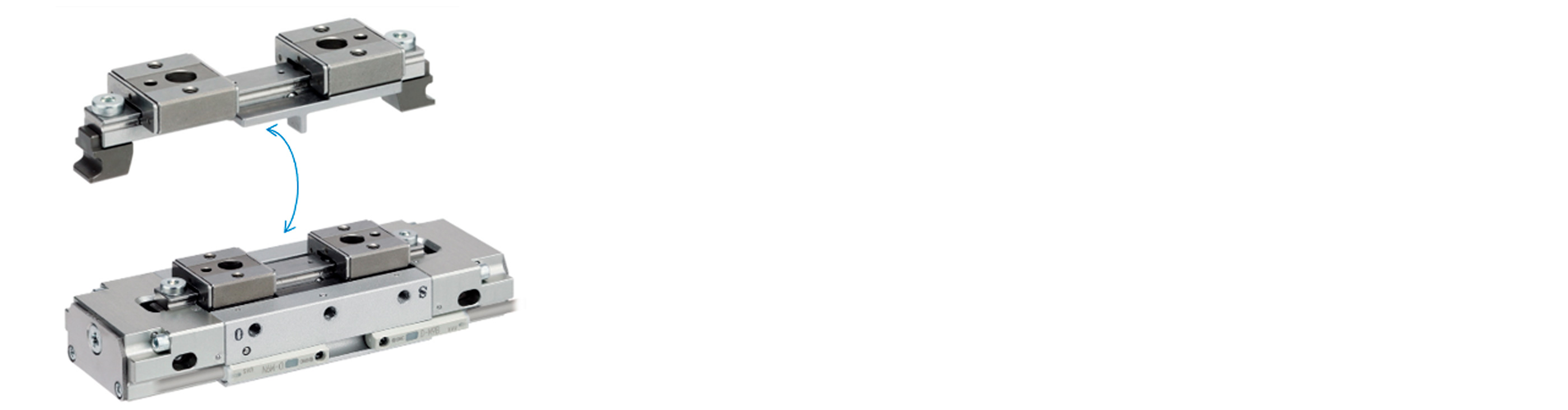 SMC´s air gripp er with finger changer function – MHF2-X7076A series
Wireless communication for next-generation robotics
As manufacturing environments become increasingly flexible and data-driven, reliable communication between the robot controller and the end-of-arm tooling is more important than ever. Cable failures remain one of the most common causes of unplanned downtime in robotic applications, particularly where continuous movement, tool changing or rotary motion are involved.
To address these challenges, SMC offers the EXW1 wireless system, a compact and lightweight wireless communication platform specifically designed for industrial robotics and moving automation equipment. By eliminating communication cables between fixed and moving components, EXW1 reduces installation complexity, minimises maintenance requirements and significantly lowers the risk of cable-related failures.
Operating with frequency hopping technology and encrypted communication in the 2.4 GHz ISM band, EXW1 provides highly reliable and noise-resistant wireless data transfer, even in demanding factory environments. The system supports communication distances of up to 100 metres, data transmission rates up to 1 Mbps and response times as low as 2 ms, making it suitable for high-performance robotic applications.
Another significant advantage is flexibility. EXW1 supports a wide range of industrial communication protocols, including EtherNet/IP™, PROFINET, EtherCAT®, OPC UA and IO-Link, allowing seamless integration into modern Industry 4.0 production environments. The result is faster commissioning, simplified machine design and improved Overall Equipment Effectiveness (OEE).
For robot users implementing automatic tool changers, conveyor tracking systems or modular production cells, EXW1 helps create a more flexible and future-proof automation architecture while reducing total cost of ownership.
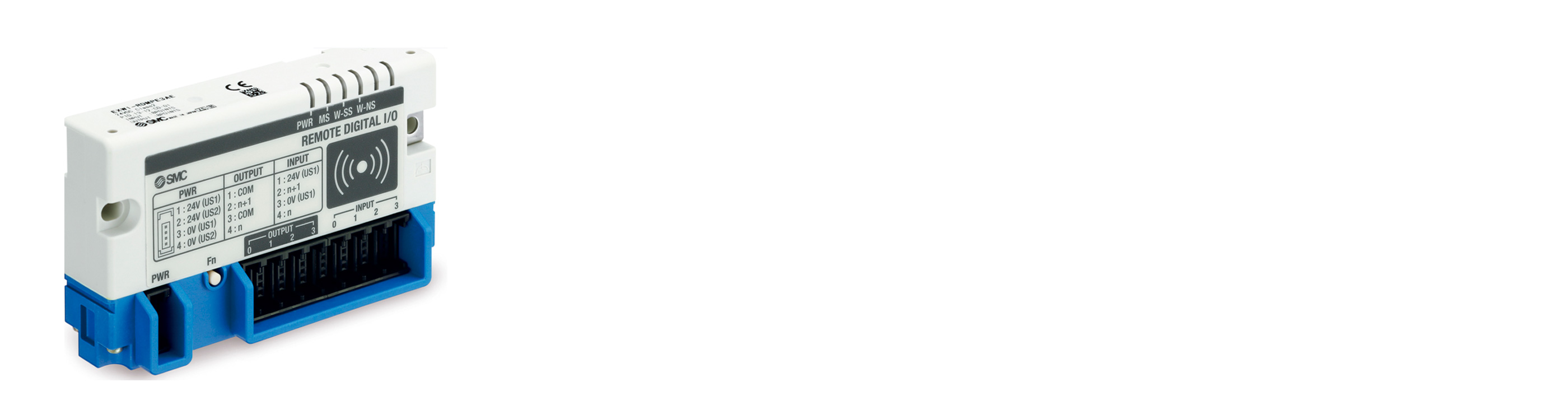 SMC´s wireless unit – EXW1 series
Moving forward, our R&D team is working constantly on system modularity, driving up the speed of gripper changes and reducing the risk of stoppages. As robotics continues to evolve, manufacturers increasingly require technology partners that can support both standard and highly customised automation solutions. Beyond providing individual components, SMC delivers complete expertise in pneumatic, electric and communication technologies, helping customers simplify integration and accelerate project implementation.
With ongoing investment in grippers, wireless communication, electric actuation and intelligent automation technologies, SMC remains committed to helping customers build more flexible, efficient and future-ready production systems.
The fact that around 50 % of our robotic gripping solutions are customised demonstrates our commitment to solving real-world automation challenges and supporting the next generation of industrial robotics.


